|
|
||
|
|
||
|
|
||
|
|
Historical outline |
|
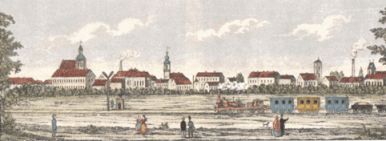
The
main framework of the mediaeval settlement on the Kluczbork Land was
associated with the broad migration of the second half of the 13th
century.
Then,
three towns of this subregion received civic rights, namely Wołczyn
in 1261, Byczyna in 1268 as well as Kluczbork - the so far marketplace
settlement - received the location document from Henryk IV Probus in
1274 becoming the main business and administrative centre of the
Kluczbork Land. The court located here was the body of appeal for the
residents of the villages, appealing against the sentences of the rural
courts. The rural settlement on these areas also reaches the 13th
century, e.g. Chocianowice establishment followed already in 1213,
Laskowice in 1239 and Małe and Wielkie Lasowice in 1292. The following
years is the period of a systematic town development, despite numerous
changes in owners of the Kluczbork Land donating towns, as an
inheritance or a collateral. Between 1341 and 1356, for a short time,
Kluczbork, Byczyna and Wołczyn became the property of the King Kazimierz
Wielki, which gave the Kluczbork Land to the Czech King Karol II in
exchange to the Warsaw Duchy. To sum up, the Kluczbork Land was in
possession of the Piasts of the Brześć line (Polish dynasty of kings)
for the longest time until their disappearance in 1675.
a target of
attacks of Anti-Hussite forces, systematically trying to conquer the
town. As the attempts were not successful, negotiations started and for
the money equivalent, Byczyna and Kluczbork were bought back from the
Hussites in 1433, Wołczyn however remained in their possession until
1436, then it went to the Dukes of Oleśnica permanently. The Dukes of
Opole ruled in Kluczbork and Byczyna, finally thanks to the Ferdynand
I's efforts, Kluczbork together with Byczyna returned to the Brześć
Duchy staying there until the house disappeared. During the reign of
Fryderyk II and Jerzy II, the development of the Reformation followed on
these areas. Despite the initial resistance from the Crusaders related
with the town with the Red Star as well as the townsfolk, the
evangelical religion started to broaden up, the both churches in
Kluczbork were given to evangelists. Special schools for the Polish
pastors were opened in Wołczyn and Kluczbork. As a result, the residents
of Kluczbork became faithful to Lutheranism in the following years.
Apart from the religious atmosphere, the Reformation also influenced the
life of the town: the power of dukes became stronger at the expanse of
the local government.
on several
occasions. Just after the war, the region had a chance for development.
The Westphalia Peace (1648) granted the Brześć and Oleśnica Dukes , thus
the whole Kluczbork Land, a freedom of profession of the Augsburg faith.
As a result, Kluczbork became a cultural centre of the Polish
protestants settling here and in other surrounding villages of the
persecuted Arians. This is also heydays for the grammar school in
Byczyna, famous for its high level of education.
a borderland area and a considerable exchange in population followed. However already in April, the County Township in Kluczbork followed, which undertook an initial administrative division of the Kluczbork Land and the final division was approved with the decree of the head of the „Śląsko-Dąbrowskie Province from the 27th of November 1945 and was binding until 1975. The Kluczbork County regained its position in 1999 including four communes, namely Byczyna, Kluczbork, Wołczyn and Lasowice Wielkie.
|
||
|
|
||
|
2007 © Kluczbork District Office |
||